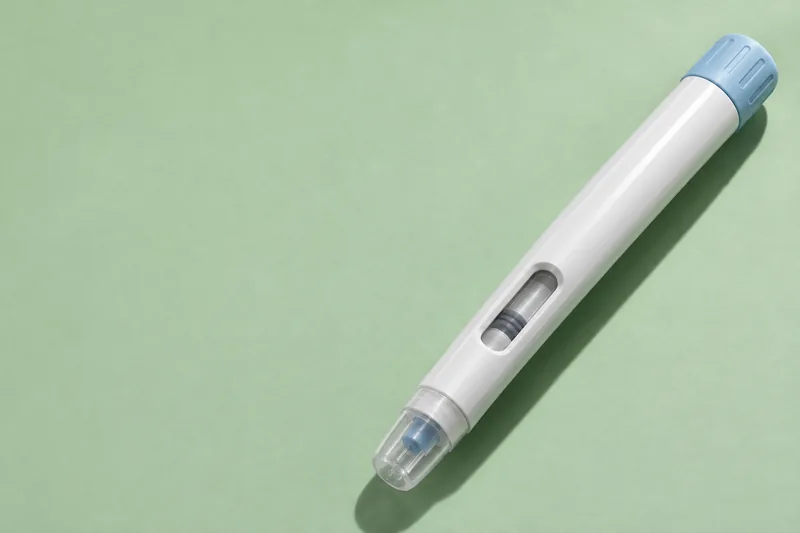
Injection, tablet or drops: GLP-1 forms explained
How the injectable, oral dissolving and sublingual forms of compounded semaglutide and tirzepatide differ, and what to ask your provider.
Draft, pending medical review. This article is general information, not medical advice.

GLP-1 medications are best known as weekly injections, but compounded versions now come in other forms too. On our care platform you will see semaglutide and tirzepatide as injections, as oral dissolving tablets, and semaglutide as sublingual drops. Here is what those words mean and what they do not tell you.
What a GLP-1 medication is
Semaglutide acts on the GLP-1 receptor, one of the signals the body uses to manage appetite and blood sugar. Tirzepatide acts on two receptors, GIP and GLP-1. Both are prescription medicines, and both carry the same boxed warning about a possible risk of thyroid C-cell tumors seen in animal studies.
The versions offered through our platform are compounded. A pharmacy prepares them for an individual patient. Compounded drugs are not FDA-approved, which means the FDA does not review them for safety, effectiveness or quality before they are marketed. They are not the same as brand-name products.
The three forms
Injection. A small needle under the skin, usually in the stomach, thigh or upper arm. Brand-name semaglutide and tirzepatide injections are taken once a week. Your provider and the pharmacy explain your dose, schedule and how to inject.
Oral dissolving tablet. A tablet that dissolves in the mouth instead of being swallowed whole. There is no needle, but how much of the medicine the body absorbs this way is less well studied than for injections.
Sublingual drops. Liquid placed under the tongue and held there for a short time before swallowing. Like the dissolving tablet, it avoids needles, and like the tablet, it has not been reviewed by the FDA.
How to think about the choice
- Evidence. Most of the published research on these medicines comes from brand-name injections and an FDA-approved oral tablet of semaglutide. Compounded tablets and drops have not been through that review.
- Comfort with needles. For some people, avoiding a needle matters more than anything else. Say so in your intake.
- Routine. A weekly injection and a daily tablet fit into a week very differently. Ask how often your form is taken.
- Price. Starting prices differ by form and are shown on each treatment page. Your final price depends on the dose your provider prescribes.
Your provider decides which option, if any, is appropriate. They may recommend a different form from the one you chose to start the intake.
Side effects to know about
The most common side effects of GLP-1 medicines involve the stomach: nausea, vomiting, diarrhea, constipation and stomach pain. More serious problems can include inflammation of the pancreas, gallbladder problems and low blood sugar when combined with some diabetes medicines. This is not a complete list. Read the safety information on each treatment page and ask your provider and pharmacist about anything you are unsure of.
Questions to ask your provider
- Which form do you recommend for me, and why?
- How often do I take it, and what happens if I miss a dose?
- Which side effects should make me call you?
- Which of my current medications could interact with it?
Sources
- FDA, FDA’s Concerns with Unapproved GLP-1 Drugs Used for Weight Loss (content current as of 10/01/2026; checked 2026-11-23).
- FDA, Compounding and the FDA: Questions and Answers (checked 2026-11-23).
- MedlinePlus, Semaglutide Injection (checked 2026-11-23).
- MedlinePlus, Tirzepatide Injection (checked 2026-11-23).